

Hospitals compete for patients across Google and other digital channels. Google Ads for hospitals can help reach high-intent users, promote key treatments and departments, and generate calls and appointment enquiries.
However, successful hospital PPC is not simply about spending more money. Campaign structure, keyword selection, landing pages, conversion tracking, lead quality, and patient follow-up all influence results.
This complete guide explains how Google Ads for hospitals works, how much hospital PPC can cost, how to calculate ROI, and how to build campaigns focused on sustainable patient growth.
Understanding Google Ads for Hospitals
Google Ads is a pay-per-click (PPC) platform where hospitals bid to show ads in Google Search when patients search for specific medical services, departments, or conditions.
Its key advantage is search intent. Someone searching for “best orthopaedic hospital near me” or “emergency cardiology hospital in Delhi” is actively looking for care. Google Ads can place your hospital in front of them with relevant messaging and a direct path to contact.
For multi-specialty hospitals, separate campaigns can target departments such as cardiology, orthopaedics, oncology, maternity, and emergency care, with tailored ads and dedicated landing pages.
Why Should Hospitals Use Google Ads in 2026?
The healthcare digital landscape has fundamentally shifted. Most patients now research and shortlist hospitals online before making a single phone call — and Google is where that research begins.
The case for hospital Google Ads in 2026:
- Search intent is unmatched — patients clicking a hospital Google Ad are actively searching, not passively browsing social media
- Immediate visibility — new departments, services, or campaigns appear at the top of results from day one
- Precise geographic targeting — reach patients within a specific radius, across multiple cities, or nationally for specialised referral services
- Measurable ROI — call tracking, form tracking, and GA4 integration show exactly which campaigns are generating actual patient enquiries
- Competitive advantage — appear above competitor hospitals in search results for your highest-value speciality keywords
- AI Overviews acceleration — while AI Overviews display organic content, hospital Google Ads appear alongside them in the paid positions, maintaining visibility across all search result formats
How to Use Google Ads for Hospitals — Step by Step
Step 1 — Define Your Hospital’s Campaign Objectives
Before creating a single ad, define what you want Google Ads to achieve. Hospital objectives typically fall into three categories:
- Direct patient acquisition — generating calls and form fills from patients actively searching for treatment
- Department-specific promotion — driving awareness and enquiries for a newly launched speciality or service
- Emergency and urgent care visibility — 24-hour presence for time-sensitive patient searches
Each objective requires a different campaign type, bidding strategy, and measurement framework.
Step 2 — Keyword Research for Hospital Campaigns
Hospital keyword strategy must balance search volume with patient intent. High-converting hospital keywords are typically:
- Procedure-specific: “knee replacement hospital in [city],” “cardiac bypass surgery hospital”
- Condition-specific: “best cancer hospital near me,” “stroke treatment hospital”
- Urgency-based: “24-hour emergency hospital,” “nearest hospital open now”
- Speciality + location: “orthopaedic hospital in South Delhi,” “maternity hospital Greater Noida”
Avoid broad, unqualified keywords like “hospital” alone — they generate expensive clicks from non-patient traffic including job seekers, students, and suppliers.
Step 3 — Build Dedicated Landing Pages for Each Campaign
Every hospital Google Ads campaign needs a dedicated landing page — not the hospital homepage. A speciality-specific landing page converts significantly better because it matches the patient’s search intent precisely.
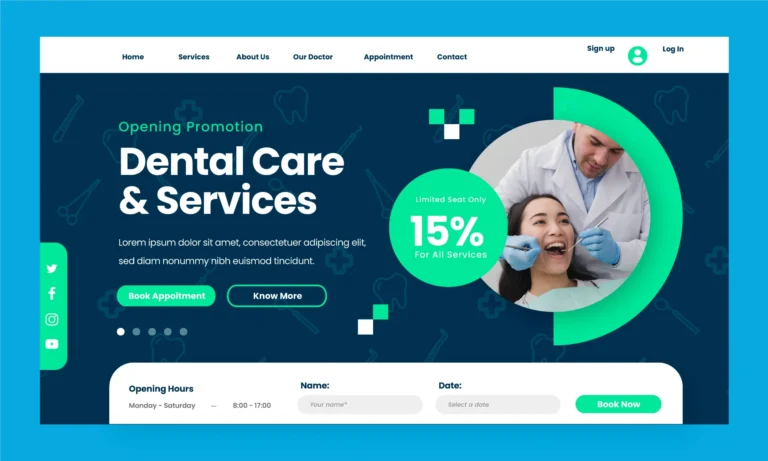
A high-converting hospital landing page includes:
- Department name and key services above the fold
- Senior specialist credentials and experience prominently featured
- Patient testimonials and outcome data as trust signals
- A click-to-call phone number visible without scrolling
- A simple 3-field appointment form (name, phone, preferred time)
Step 4 — Set Up Conversion Tracking Before Spending
No hospital Google Ads campaign should go live without tracking configured. Conversions to track include:
- Phone call clicks from the landing page and call extension
- Appointment form submissions
- WhatsApp chat initiations
- Direction requests (for local campaigns)
Without conversion data, it is impossible to reduce cost per patient acquisition over time or identify which campaigns are performing and which are wasting budget.
Which Google Ads Campaigns Work Best for Hospitals?
Google Search Ads — the most useful format for hospitals. Text ads appearing when patients search specific medical keywords deliver the highest patient intent and conversion rates. This is where the majority of hospital Google Ads budget should go.
Google Local Services Ads (LSAs) — hospital-specific LSAs appear above standard Search Ads with a “Google Screened” verification badge. Pay per verified lead rather than per click — highly effective for building patient trust and local visibility.
Google Performance Max — AI-driven campaigns across Search, Display, YouTube, Gmail, and Maps. Effective for established hospital campaigns with sufficient conversion data for Google’s algorithm to optimise toward.
YouTube Video Ads — effective for brand building and promoting high-consideration specialities (oncology, fertility, cardiac surgery) where patients research extensively before committing.
Google Display Remarketing — reaching patients who visited your hospital website or landing page but did not enquire — a cost-effective way to recapture warm audiences.
How to Structure Google Ads Campaigns for Hospitals
The most effective hospital Google Ads account structure mirrors the hospital’s department and speciality structure:
HOSPITAL GOOGLE ADS ACCOUNT
├── CAMPAIGN: Orthopaedic Department
│ ├── Ad Group: Knee Replacement
│ ├── Ad Group: Hip Replacement
│ └── Ad Group: Sports Injury
├── CAMPAIGN: Cardiology Department
│ ├── Ad Group: Heart Surgery
│ ├── Ad Group: Angioplasty
│ └── Ad Group: Cardiac Consultation
├── CAMPAIGN: Emergency Services
│ └── Ad Group: 24-Hour Emergency
└── CAMPAIGN: Maternity & Gynaecology
├── Ad Group: Normal Delivery
└── Ad Group: C-Section Hospital
Each ad group contains tightly themed keywords, matching ad copy, and a department-specific landing page — ensuring maximum Quality Score and the lowest possible cost per patient enquiry.
How Much Do Google Ads Cost for Hospitals?
Hospital Google Ads costs vary significantly by speciality, location, and competition level. Here are realistic 2026 benchmarks for India:
| Speciality | Monthly Ad Budget | Avg. CPC | Cost Per Patient Lead |
| General / Emergency | ₹30,000 – ₹60,000 | ₹40 – ₹150 | ₹500 – ₹1,500 |
| Orthopaedics | ₹40,000 – ₹80,000 | ₹80 – ₹250 | ₹800 – ₹2,500 |
| Cardiology | ₹50,000 – ₹1,00,000 | ₹100 – ₹350 | ₹1,000 – ₹3,500 |
| Oncology | ₹60,000 – ₹1,20,000 | ₹120 – ₹400 | ₹1,500 – ₹4,000 |
| Maternity | ₹35,000 – ₹70,000 | ₹60 – ₹200 | ₹700 – ₹2,000 |
| Multi-speciality (full account) | ₹1,00,000 – ₹3,00,000+ | Varies | Varies by department |
Why hospital CPCs are higher than general healthcare: Hospital-level keywords represent higher-value patient decisions — patients searching for cardiac surgery or cancer treatment are committing to significant treatment journeys, which makes those clicks inherently more competitive and more valuable.
What Budget Should a Hospital Set for Google Ads?
Budget decisions depend on hospital size, target patient volume, and speciality mix:
Small private hospital (1-3 departments): ₹50,000 – ₹1,00,000/month — sufficient to generate meaningful data and consistent patient enquiries for priority departments.
Mid-size multi-speciality hospital: ₹1,00,000 – ₹2,50,000/month — covering 4-8 speciality campaigns simultaneously with enough volume per campaign for Google’s Smart Bidding to optimise effectively.
Large hospital or hospital group: ₹2,50,000 – ₹10,00,000+/month — across multiple locations, departments, and campaign formats including Search, LSAs, Performance Max, and YouTube.
The critical budget rule: Each individual speciality campaign needs a minimum daily budget that allows at least 5-10 clicks per day — below this threshold, Google cannot gather enough data to optimise, and campaigns underperform. Spreading a small budget across too many campaigns simultaneously is one of the most common hospital Google Ads mistakes.
How to Calculate Google Ads ROI for Hospitals
Hospital Google Ads ROI is calculated by comparing the revenue generated from ad-attributed patients against the total advertising spend:
Basic ROI formula:
ROI = (Revenue from Ad Patients – Ad Spend) ÷ Ad Spend × 100
Practical example:
- Monthly ad spend: ₹1,00,000
- Patient leads generated: 80
- Lead-to-appointment conversion rate: 30% → 24 patients
- Average revenue per patient: ₹15,000
- Total revenue: ₹3,60,000
- ROI: (₹3,60,000 – ₹1,00,000) ÷ ₹1,00,000 × 100 = 260% ROI
What is a good ROI for hospital Google Ads?
For most hospital specialties, a 3:1 to 8:1 revenue-to-ad-spend ratio is considered strong performance. High-value procedures (cardiac surgery, joint replacement, oncology) produce significantly higher ROI per patient because of their treatment value relative to acquisition cost.
How Long Does Hospital Google Ads Take to Work?
Immediate results (Day 1-7): Clicks and impressions begin as soon as campaigns go live. First patient enquiries typically arrive within 24-48 hours for campaigns targeting active high-intent keywords with a functioning call extension.
Learning phase (Week 2-4): Google’s algorithm tests ad variations and bidding strategies. Conversion data accumulates, and Cost Per Click begins to stabilise. This phase requires patience — pausing or significantly changing campaigns during learning disrupts optimisation.
Optimised performance (Month 2-3): With 30+ conversions per campaign per month, Smart Bidding strategies (Target CPA or Target ROAS) can be activated — consistently reducing cost per patient lead as the algorithm refines targeting.
Compounding returns (Month 3+): Campaign history, Quality Score improvements, and refined negative keyword lists combine to reduce cost per patient acquisition progressively. Month 6 campaigns consistently outperform Month 1 at the same budget.
Common Google Ads Mistakes Hospitals Should Avoid
Mistake 1 — Using the homepage as the landing page
Every department campaign needs its own dedicated landing page. Homepage traffic from hospital Google Ads converts at 1-3%. Department-specific landing pages convert at 8-15%.
Mistake 2 — No negative keywords
Without negative keywords, hospital ads appear for searches like “hospital jobs,” “hospital food menu,” “medical college fees,” and other non-patient queries — consuming budget without generating patient enquiries.
Mistake 3 — Running without call tracking
Most hospital patient enquiries come via phone — not form fill. Without call tracking software (CallRail, Novocall, or Google’s native call tracking), the majority of conversions are invisible, making campaign optimisation impossible.
Mistake 4 — Too many campaigns, too little budget
A hospital trying to run 10 department campaigns on ₹50,000/month is giving each campaign ₹5,000 — insufficient to generate enough click volume for meaningful data or consistent enquiries.
Mistake 5 — Ignoring Quality Score
A low Quality Score (below 5) inflates cost-per-click by 20-50%. Improving ad relevance, landing page experience, and keyword-ad alignment reduces costs significantly across the entire account.
How to Generate Patient Calls Within 24 Hours of Launching Hospital Google Ads
For hospitals that need immediate patient enquiries after campaign launch:
- Start with emergency and urgent care keywords — “24-hour hospital near me” and “emergency [specialty] hospital” have the highest same-day booking intent
- Enable call extensions immediately — make your hospital phone number clickable directly from the ad on mobile
- Bid on competitor keywords (brand terms) — patients searching competitor hospital names are comparison shopping; your ad appearing alongside competitor results captures comparison-stage patients
- Use location targeting tightly — limit initial targeting to a 5-10 km radius to concentrate spend on genuinely accessible patients
- Set call-only ads for mobile — for emergency services, remove the landing page step entirely; the ad shows only a phone number to call directly
Frequently Asked Questions
1. Are doctors and hospitals allowed to advertise on Google?
Yes. Doctors and hospitals can advertise on Google Ads, subject to Google’s healthcare advertising policies and applicable local regulations. Healthcare advertising should avoid unsupported patient outcome claims and follow relevant medical advertising guidelines.
2. How do hospitals advertise most effectively?
An effective strategy can combine Google Search Ads, Local Services Ads, and SEO. YouTube can also support awareness for high-consideration procedures. Every channel should be measured against actual patient enquiries, not just impressions or clicks.
3. What is the most successful Google Ads strategy for hospitals?
A strong approach includes department-specific campaigns, tightly matched keywords, dedicated landing pages, call tracking, and data-driven budget allocation toward campaigns generating qualified patient leads.
4. How do I generate patient calls within 24 hours using Google Ads?
Use call extensions, target high-intent and relevant procedure keywords, and focus location targeting around your hospital. However, call volume and lead quality can vary, so results cannot be guaranteed within 24 hours.
5. How do I know if my hospital Google Ads are working?
Use conversion tracking for phone calls, form submissions, and appointment bookings. Impressions and clicks alone cannot show whether your campaigns are generating valuable patient enquiries. Set up tracking before launching campaigns.
Conclusion
Google Ads for hospitals is a core patient acquisition channel in 2026 when structured and managed correctly. Hospitals that effectively capture patient intent on Google can generate measurable enquiries and appointments, regardless of their size or age.
The right campaign structure, keyword strategy, landing pages, and conversion tracking determine whether your budget generates patients or simply clicks.
Ocean Multivision — one of India’s leading healthcare marketing agencies — manages Google Ads campaigns for hospitals and multi-specialty centres across India. From campaign structure and landing pages to conversion tracking and ROI reporting, we provide a complete patient acquisition system.