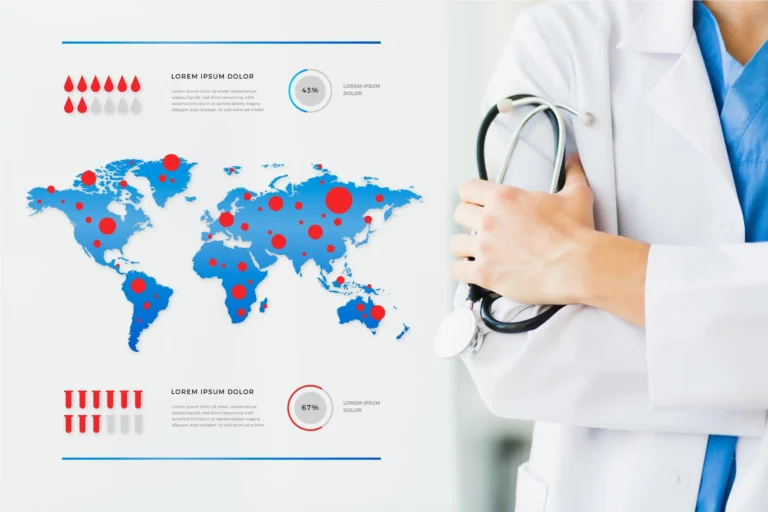


Today, most patients search online before choosing any doctor, clinic, or hospital. Whether they need treatment, specialist care, or medical advice, search engines often influence their decision. This makes healthcare SEO an important part of any healthcare marketing strategy.
But many healthcare providers focus on only one aspect of SEO and miss opportunities to attract more qualified patients. To achieve long-term growth, it is important to understand the different types of SEO and how each contributes to better visibility, trust, and patient acquisition.
In this complete guide, we’ll explain the Types of SEO for healthcare, the top strategies that help hospitals and clinics rank higher, and how emerging technologies like AI Search and Google AI Overviews are changing healthcare SEO.
What Is Healthcare SEO?
Healthcare SEO is the process of optimising a hospital, clinic, or doctor’s online presence so patients can find them on Google when searching for treatments, specialists, or medical services. It covers content strategy, technical performance, local visibility, reputation signals, and authority building — all working together to make your practice the most visible and reliable option in your market.
What makes healthcare SEO different from standard SEO is Google’s YMYL (Your Money or Your Life) classification, which holds all medical content to the highest standards of accuracy and trust. Ranking a medical practice requires verified credentials, genuine clinical expertise, and a content strategy built specifically for how Google evaluates health content. A general SEO agency simply is not equipped for this.
Do You Know Your SEO? Why It Matters for Healthcare
Most healthcare providers know SEO exists — but few understand the specific types of SEO that apply to their practice, or which ones they are currently missing.
Here is the reality: a hospital with a technically fast website but no any type of SEO is invisible in the map pack. A clinic with great content but no EEAT signals is penalised by Google’s helpful content algorithm. A doctor with strong local rankings but no schema markup misses rich result opportunities in search.
Understanding the different types of SEO for healthcare is what allows hospitals, clinics, and doctors to build a complete, gap-free digital presence — rather than investing heavily in one area while remaining invisible in others.
Why Is SEO Important for Hospitals, Clinics, and Doctors?
- Over 80% of patients search online before booking any healthcare appointment — making Google the first point of contact for most new patients
- 77% of patients check online reviews before selecting a doctor — reviews are both a trust signal and an SEO ranking factor
- “Near me” healthcare searches have grown over 200% in three years — local SEO is now crucial, not optional
- Organic search traffic is zero-cost-per-click once rankings are established — unlike paid ads that stop the moment budgets run out
- Healthcare providers on page one receive over 90% of all patient clicks — page two is effectively invisible
What Are the Types of SEO — and Which Apply to Healthcare?
There are multiple distinct types of SEO — and the most effective healthcare digital strategies integrate all of them as a coordinated system rather than isolated activities.
Top 10 Types of SEO for Healthcare to Grow Patient Traffic
Strategy 1 — On-Page SEO for Healthcare
On-page SEO is the foundation of every healthcare website’s organic performance. It involves optimising individual pages — service pages, doctor profile pages, condition guides, and blog posts — so Google understands exactly what each page is about and which patient searches it should rank for.
Key on-page SEO activities for healthcare:
- One primary keyword per page — used naturally in the H1, meta title, meta description, and first paragraph
- Keyword-rich, clinically accurate content — minimum 800-1,000 words per service page
- Optimised headings (H1, H2, H3) that match patient search intent
- Internal links connecting service pages, condition guides, and doctor profiles
- Image alt text with descriptive, keyword-relevant descriptions
- Clear, visible appointment CTAs on every page
Strategy 2 — Technical SEO for Healthcare Websites
Technical SEO ensures that search engines can find, crawl, and index your healthcare website efficiently — and that patients have a fast, smooth experience when they arrive.
Core technical SEO requirements for healthcare:
- Page speed — healthcare websites must load in under 3 seconds on mobile; slow loading directly increases bounce rate and reduces Google rankings
- Mobile-first design — over 70% of healthcare searches happen on mobile devices; Google indexes the mobile version of your site first
- Core Web Vitals — Google’s three performance metrics (LCP, FID, CLS) directly influence rankings and must be in the “green” zone
- HTTPS security — essential for all healthcare websites; patients will not trust an unsecured medical site
- XML sitemap and robots.txt — ensuring Google can discover and index all important pages efficiently
- Structured data markup — schema code that helps Google understand page content and enables rich results
Strategy 3 — Healthcare Local SEO
Local SEO is one of the highest-converting types of SEO for healthcare — because patients searching “best orthopaedic doctor near me” or “IVF clinic in Delhi” are ready to book. Appearing in the Google Map Pack for these searches directly produces patient appointments.
Key local SEO activities for healthcare:
- Google Business Profile fully optimised — every service listed, weekly posts, consistent review responses
- NAP (Name, Address, Phone) consistency across every directory — Practo, Lybrate, JustDial, Sulekha
- Location-specific service pages — targeting procedure + city keywords
- Systematic review acquisition — asking every satisfied patient for a Google review
- Seeded Q&A on Google Business Profile with location-specific keywords
Healthcare local SEO is not the same as general local SEO — it requires medical compliance awareness and patient-specific content strategy.
Strategy 4 — Medical SEO / Healthcare Content SEO
Medical SEO is the most complex type of SEO for healthcare — involving the creation of clinically precise, EEAT-compliant content that builds topical authority across your specialty and attracts patients at every stage of their healthcare research journey.
What effective medical content SEO includes:
- Condition guides — explaining symptoms, causes, and when to see a specialist
- Procedure explainers — what to expect before, during, and after specific treatments
- Cost guides — addressing the financial questions patients search for but rarely ask directly
- FAQ content — targeting “People Also Ask” queries in Google search results
- Doctor-authored blogs — building personal clinical authority and topical depth
Medical SEO is what separates healthcare websites with compounding organic authority from those that plateau after basic optimisation.
Strategy 5 — EEAT SEO for Healthcare
EEAT — Experience, Expertise, Authoritativeness, Trustworthiness — is Google’s quality framework for evaluating all healthcare content. It is one of the most critical types of SEO for healthcare because Google applies these standards most stringently to medical websites.
How to build EEAT signals in healthcare:
- Verified doctor author bylines on all clinical content
- Doctor qualification and experience pages
- External citations to peer-reviewed studies and authoritative medical sources
- Patient testimonials and case studies with appropriate consent
- Hospital accreditation and certification signals on the website
Healthcare websites without strong EEAT signals consistently rank lower — regardless of how well-optimised their technical and on-page SEO is.
Strategy 6 — Schema Markup SEO for Healthcare
Schema markup is structured code that tells Google exactly what your page contains — enabling rich results in search that significantly increase click-through rates.
Most important schema types for healthcare:
- Physician schema — verifies doctor credentials and specialty directly in search results
- MedicalOrganization schema — identifies your practice type, location, and services
- LocalBusiness schema — enables knowledge panel and map pack rich results
- FAQPage schema — displays your FAQ answers directly in Google search results
- MedicalProcedure schema — helps Google understand and rank procedure-specific pages
- BreadcrumbList schema — clarifies your website hierarchy for Google crawlers
Strategy 7 — Voice Search SEO for Healthcare
With the growth of voice assistants — Google Assistant, Siri, Alexa — voice search SEO has become an increasingly important type of SEO for healthcare providers. Patients asking “who is the best spine surgeon near me” or “what are the symptoms of a slipped disc” are using natural, conversational language.
How to optimise for voice search in healthcare:
- Target long-tail, conversational keyword phrases — not just short keywords
- Create dedicated FAQ content matching exactly how patients ask questions verbally
- Ensure Google Business Profile is fully optimised — the primary source for local voice search results
- Aim for featured snippet positions — voice assistants read the featured snippet as their answer
Strategy 8 — Reputation SEO for Healthcare
Online reputation is both a patient trust signal and an SEO ranking factor — particularly for local search. Google’s local algorithm uses review volume, recency, and response rate as direct ranking signals.
Reputation SEO activities for healthcare:
- Systematic review acquisition — structured process for requesting Google reviews at discharge or follow-up
- Professional responses to every review within 48 hours — including negative reviews
- Active management of Practo, Lybrate, and JustDial profiles
- Displaying testimonials with schema markup on key service pages
A clinic with 300 recent Google reviews consistently outranks one with 30 — regardless of which delivers better clinical care.
Strategy 9 — Link Building SEO for Healthcare
Backlinks — links from other websites to yours — remain one of Google’s strongest ranking signals. For healthcare, this means earning links from credible, medically relevant sources.
Effective healthcare link-building strategies:
- Medical directory listings — NABH, Practo, Lybrate, JustDial, hospital association sites
- Guest articles on health publications and medical blogs
- Doctor interview features in local news and healthcare media
- Links from hospital affiliation and medical college websites
- Educational content that earns natural links from other healthcare providers and patient resources
Healthcare link building must prioritise quality over quantity — one link from a credible medical directory is worth more than dozens from irrelevant sites.
Strategy 10 — AI Search, AI Overviews, and What They Mean for Healthcare SEO
AI Overviews — Google’s AI-generated summaries that appear above organic results — are already influencing how patients discover healthcare information in 2026. This is the newest and most rapidly evolving type of SEO for healthcare.
How to optimise for AI Overviews in healthcare:
- Structure content with clear definitions, step-by-step answers, and direct responses to patient questions
- Use properly structured headings so AI can extract specific answers for overview citations
- Build strong EEAT signals — AI Overviews prioritise content from verified, authoritative medical sources
- Add Speakable schema — signals to Google which content is suitable for AI-generated audio responses
- Create comprehensive topical clusters — AI Overviews favour sources with deep, broad coverage of a subject
Practices that ignore AI search optimisation in 2026 will progressively lose visibility as AI-generated results capture an increasing share of healthcare searches.
Common Challenges of Medical SEO
Healthcare providers face specific SEO challenges that do not exist in other industries:
- YMYL compliance pressure — Google scrutinises medical content far more strictly than any other category
- Highly competitive keywords — “best cardiologist in Delhi” is significantly harder to rank than non-medical terms
- Content accuracy requirements — incorrect medical information creates both clinical risk and SEO penalty
- Algorithm sensitivity — healthcare websites are disproportionately affected by Google core updates targeting YMYL content quality
- Regulatory compliance — Indian Medical Council guidelines restrict certain types of health claims in online content
- Multi-location complexity — hospital groups with multiple locations require sophisticated local SEO architecture to avoid cannibalisation
Future of SEO for Healthcare Practices
The healthcare SEO landscape in 2026 and beyond is being shaped by three major forces:
AI-driven search — AI Overviews, conversational search, and zero-click results mean healthcare providers must optimise for direct answer extraction, not just blue link rankings.
Voice search dominance — as smart devices become the primary search interface for older patients, voice search optimisation becomes essential for any practice targeting patients over 50.
Hyper-local personalisation — Google is increasingly personalising healthcare search results based on user location, device, and search history — making granular local SEO and location-specific content more important than ever.
Practices that invest in a complete, integrated types-of-SEO strategy today will compound significant advantages over competitors who are still thinking of SEO as a single activity.
Frequently Asked Questions
1. What is SEO in healthcare?
Healthcare SEO is optimising a hospital or clinic’s online presence — through content, technical improvements, and local signals — so patients find them on Google when searching for medical services.
2. How do I optimise my clinic for Local SEO?
Fully optimise your Google Business Profile, build consistent directory citations, create location-specific service pages, acquire patient reviews systematically, and respond professionally to every review within 48 hours.
3. How long does healthcare SEO take to show results?
Most healthcare practices see measurable ranking improvements within 3-4 months and significant organic patient traffic growth within 6-9 months of a properly executed strategy.
4. What makes healthcare SEO different from regular SEO?
Healthcare SEO must comply with Google’s YMYL standards and EEAT requirements — demanding verified medical credentials, clinical content accuracy, and external trust signals that standard SEO for other industries does not require.
5. Does my healthcare website need to be mobile-friendly to rank?
Yes — absolutely. Google uses mobile-first indexing for all websites, meaning it ranks the mobile version of your site first. A non-mobile-friendly healthcare website will rank significantly lower regardless of its content quality.
Conclusion
Understanding and implementing all 10 types of SEO for healthcare — from on-page and technical SEO through to AI search optimisation — is what separates healthcare practices that grow consistently from those that remain invisible online.
Healthcare SEO is not a one-time task. It is a structured, ongoing discipline that requires medical content expertise, technical precision, local strategy, and genuine clinical authority — all working together.Ocean Multivision — Best Healthcare Marketing Agency — builds integrated, all-types healthcare SEO strategies for hospitals, clinics, and specialist doctors across India — implementing every type of SEO as a coordinated system that delivers sustainable, measurable patient growth.